
Haga clic aquí para ver esta carta en español.
Dear Mr. President, Senator Menéndez, Representative Sánchez, and caucus leadership,
We are writing as U.S. and Mexican civil society organizations who serve the immigrants and returned immigrants of this region. We congratulate you on the proposed immigration plan announced on January 20, 2021. We celebrate the administration’s work in addressing the need to prioritize keeping families together and restoring humanity to our immigration system. The proposed plan is an important and welcome starting point as it comes at a time when immigrant and mixed-status families have been under siege for more than 10 years and after over 3 million have been deported, many before the Trump era.
The current plan provides an 8-year pathway to citizenship for eligible hardworking people who have long been integrated into American families and society. For eligible DACA recipients, TPS holders, and immigrant farmworkers, the proposed plan offers immediate permanent resident status and a 3-year pathway to citizenship. The plan also affords the possibility of extending lawful protective status to those deported under the Trump Administration for family unity, humanitarian, or public interest purposes, and additional provisions are intended to support family unity by eliminating the 3- and 10-year bars that have painfully kept families separated for so long.
The administration’s mandate gives hope to millions of lives while strategically leveraging waivers built into the immigration system to provide relief to families living in fear of deportation and by reuniting others already separated by forced return. The Department of Homeland Security also announced a 100-day moratorium on deportations for certain noncitizens beginning January 22, 2021.
We believe that if family unity is to be the guiding principle of our immigration policy, there are still opportunities to strengthen the immigration proposal to build back better and set the stage for a more inclusive and equitable society.
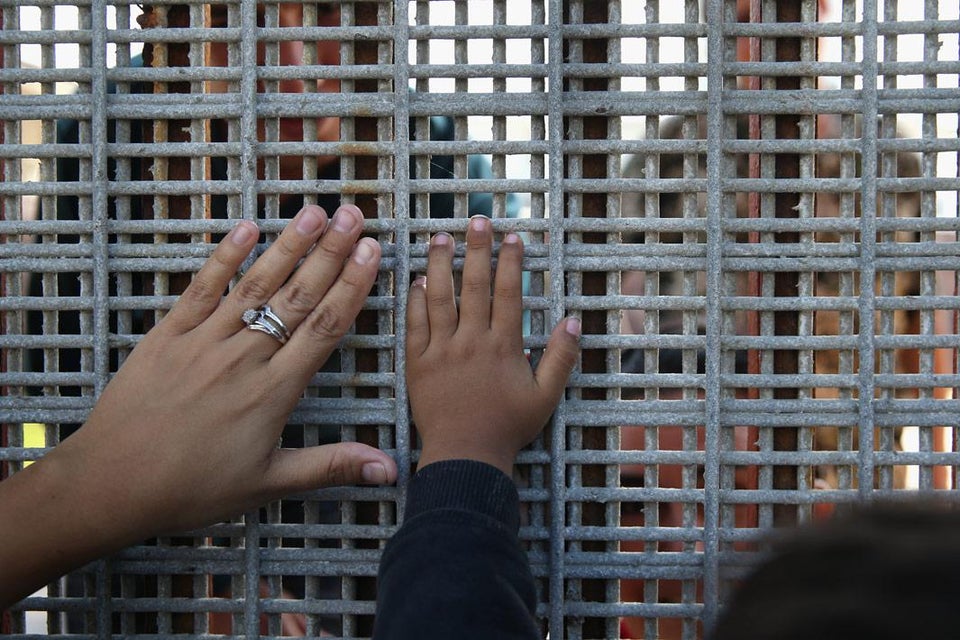
Hundreds of thousands on the Mexican side of the border have already suffered forced return and seemingly will not benefit from the current proposal, even though they are the spouses or parents of American citizens who still hope to be reunited with their family in the United States. They have been permanently barred, in some cases, due to multiple deportations or illegal entries after attempting to get back to their families. Over 200 deported U.S. veterans have been dishonorably banished after their service and now live in Tijuana and other parts of Mexico. In many cases, their deportation resulted from drug-related, non-violent crimes or minor offenses stemming from the difficulties of readjusting to civilian life. They were punished twice, being deported after they had already paid their debt to society. After their removal, Mexicans find it difficult to obtain a tourist visa to visit. They also are often denied dignity in mourning and cannot even enter the United States to say goodbye to dying family members.
American lives also hang in the balance as countless citizens have been de facto deported and forced to leave the United States due to U.S. immigration policies. Today, more than 600,000 U.S. children live in Mexico with their deported family members where they continue to lose language and cultural ties to the United States, important factors that will affect their ability to succeed as U.S. adults. They, and thousands of U.S. spouses, who gave up their lives, careers, businesses, and communities, now reside in Mexico, some in perilous situations where they are regularly exposed to violence and unrest. Their lives are analogous to those of undocumented migrants in the United States. Often they work without employment authorization and face challenges obtaining permanent legal status for themselves and their children.
In light of the significant number of people living in limbo, we urge you to address the reunification of mixed-status families already separated by deportation and to acknowledge their circumstances as a key element of the administration’s greater goal of unifying families. We hope that the legislation will include the following specific actions that will bring our veterans and others deported or forced to return back home, and allow these families to finally unite:
- Extension of presence waiver to anyone who otherwise meets the eligibility criteria but was deported, or voluntarily returned or departed on or after January 20, 2009.
- Discretionary relief for people who have been criminalized, have had contact with the criminal legal system, or have criminal records.
- Recognition of citizens’ rights to challenge their spouses’ deportation under the Constitution based on the right to marriage.
- Creation of U.S. Embassy and Consulate directives that require officers to consider temporary family reunification of returned and deported individuals as a positive discretionary factor at the time of issuing non-immigrant visas.
- Creation of waivers for automatic bars (e.g. entry without inspection after a prior removal, multiple deportations, false claims and misrepresentations, etc.) for those seeking both immigrant and non-immigrant visas.
We further recommend that for the current proposal to fully accept and provide protection to the estimated 11 million undocumented immigrants living in the United States, the immigration bill should further consider:
- Inclusion of immigrants who have contributed to American society and have otherwise earned a pathway to citizenship but may not have a qualifying relative.
- Expansion of qualifying relatives for family-based petitions to include children under 21 years.
- Reduction of the timeline for adjustment of status from 5 years to 1 year, as provided in the Reagan Amnesty, for undocumented immigrants, many of whom have already lived in the United States for decades.
- Exception from removal during the 100-day moratorium to persons who may have waived their right to remain in the United States but are eligible for relief under the proposed plan.
As civil society organizations, we support the mandate outlined by President Biden and are eager to offer constructive dialogue with your offices on the solutions available. We look forward to building a partnership with you to advance our common agenda to protect immigrant families against further separation and to begin the process of reuniting families already harmed by prior immigration policies.
Respectfully submitted,
Over 70 organizations that serve, represent, and advocate on behalf of immigrant families in Mexico and the United States (see signatory list below)
SIGNATORIES
Organizations/Colectives
Aldea – The People’s Justice Center, Reading, PA
All of Us or None, Sacramento Chapter
All of Us or None Texas, San Antonio Chapter
Al Otro Lado, Tijuana/San Diego, CA
Asylum Access México (AAMX), A.C., Mexico City, Mex.
Bay Area Asylum Support Coalition (BAASC), Oakland, CA
Border Line Crisis Center, Tijuana, Mex.
California Collaborative for Immigrant Justice, San Francisco, CA
California Immigrant Youth Justice Alliance, CA
CALMA: Collective, Action for Laborers, Migrants & Asylum Seekers, San Francisco & Oakland, CA
Caminamos Juntos, San Miguel de Allende, Mex.
Cancun Deported Veteran Resource and Support Center, Cancun, Mex.
Carroll Gardens Association (CGA), New York, NY
Centro Legal de la Raza, Oakland, CA
Centro de Investigación y Proyectos para la Igualdad de Género, AC, Guadalajara, Mex.
Chicago Community and Workers Rights, Chicago, IL
Church World Service, National
Colectivo Venas Abiertas, Leipzig, DE
Community Legal Services in East Palo Alto, East Palo Alto, CA
Deportados Unidos en la Lucha, Mexico City, Mex.
Dreamers Moms USA Tijuana A.C., Tijuana, Mex.
Estudiantes Regresando a México, A.C., Léon, Mex.
Faith in Public Life, National (D.C.-based)
Family Reunification, Chicago, IL
Global Exchange, International
Grupo Comunidad en Retorno, Mexico City, Mex.
Grupo Destino y Libertad Servicio Unidad Recuperación, Guadalajara, Mex.
Hand in Hand: The Domestic Employers Network, New York, NY
Haitian Bridge Alliance, San Diego, CA
Human Rights First, New York, NY
Human Rights Watch, New York, NY
Hutchings Immigration Law LLC, Denver, CO
Immigrant Access to Justice Assistance, Los Angeles, CA
Immigrant Defenders Law Center, Los Angeles, CA
Immigrant Legal Advocacy Project, Portland, ME
Immigrants’ Rights Coalition, Chicago, IL
Iniciativa Latinxs en Leipzig, Leipzig, DE
Instituto de Geografía para la paz AC, Ciudad Juárez, Mex.
Instituto para las Mujeres en la Migración, AC, Mexico City, Mex.
Justice and Diversity Center of the Bar Association of San Francisco, San Francisco, CA
Justice For Our Neighbors-NCT, Dallas and Fort Worth, TX
Justice in Motion, New York, NY
Kino Border Initiative, Nogales, AZ
Latin America Working Group, Washington, D.C.
Long Beach Area Peace Network, Long Beach, CA
Long Beach Immigrant Rights Coalition, Long Beach, CA
Mexican Migration Field Research Program, San Diego, CA
Miguel’s Hands, Minneapolis, MN
Mujeres Unidas y Activas, Oakland, CA
National Justice for Our Neighbors, National
New Mexico Immigrant Law Center, Albuquerque, NM
NWI Resistance, Northwest Indiana
ODA Otros Dreams en Acción, Mexico City, Mex.
Ohio Immigrant Alliance, OH
Oxfam America, Boston, MA & Washington D.C.
Oxfam México, Mexico City, Mex.
Puente TJ United, Tijuana, Mex.
Red de Pueblos Trasnacionales, Bronx, NY
Repatriate Our Patriots Desolate Deported Vet Zine, St. Helens, OR
Rockaway Women for Progress, New York, NY
Sin Fronteras IAP, Mexico City, Mex.
Social Justice Collaborative, Berkley, CA
South Texas Human Rights Center, Falfurrias, TX
Student Immigrant Empowerment Project at Stanford, Stanford, CA
The Rhizome Center for Migrants, Guadalajara/Houston, TX
Transformations CDC, Cincinnati, OH
UC Davis Immigration Law Clinic, Davis, CA
Unified US Deported Veterans Resource Center, Tijuana, Mex.
Veterans for American Ideals, Washington, D.C.
Wind of the Spirit Immigrant Resource Center, Morristown, NJ
Washington Office on Latin America, Washington D.C.
Xenia Consultoras S. C., Zapopan, Mex.


 English
  Español de México