
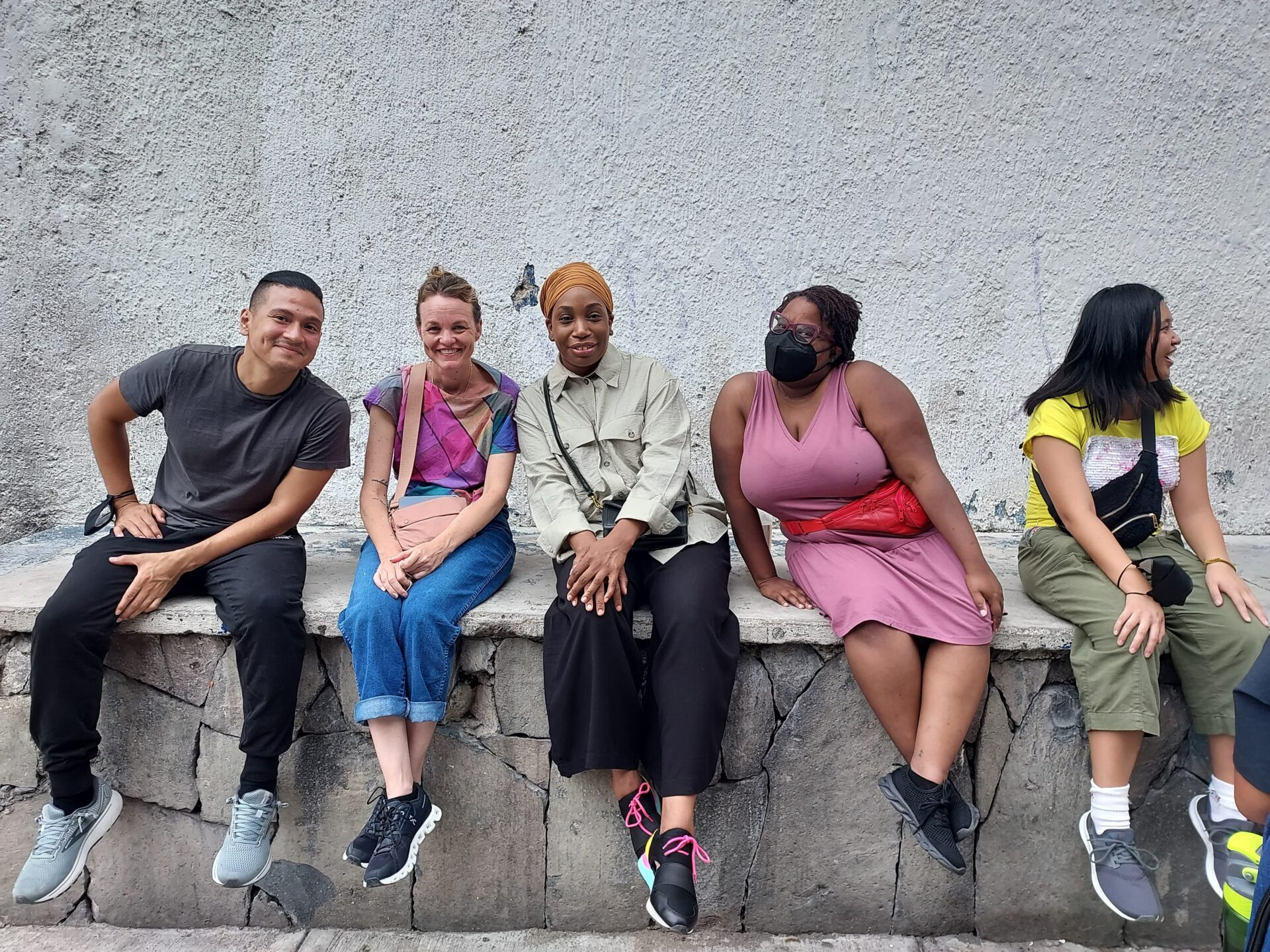
Annie joined The Rhizome Center for Migrants’ education program for U.S. immigration advocates, academics, and law students in Guadalajara, August 5-12, 2022. As the recipient of La Michoacana Foundation’s scholarship award for law students interested in pursuing immigrant rights work, we asked Annie to share her thoughts about the program and her experience with us this past summer.
Annie, you’re a second career law student with years of experience teaching immigrant students in the classroom. Can you tell us a little bit about yourself and why you decided to study law?
I have taken the long road to law school. As a child living on a farm south of San Antonio, I dreamed of becoming a lawyer. After graduating from Southwestern University, I participated in the Fulbright-Hayes program in Guatemala for a summer. When I came back, Texas needed bilingual teachers, so I decided to put my Spanish degree to use in the classroom. I then spent 17 years in the classrooms and at the district level in some of the most underserved urban school districts. It is during this time that I have learned about the reasons, the passages, the great happiness, the fears, the longing, and the tribulations involved in the migrant journey. My open-door policy and ability to communicate in the native language allowed me to build trust and have in depth conversations about these situations. It has led to supporting families with immigration paperwork, passport acquisition, finding resources, and advocating for student and family rights in the educational system.
As a bilingual and special maestra, I was an advocate. Therefore, there is not much difference between my past roles and my future roles after law school.
In August 2022, you had the chance to participate in The Rhizome Center for Migrants’ one-week education program in Guadalajara, Mexico, for U.S. law students, professionals, and advocates. Why did you apply to the program and what did you learn? Can you tell us about one or two takeaways that you feel you can take with you as you begin your career as an immigration attorney?
I applied to the program based on reading a recommendation from a peer in the Immigration Law Society at South Texas College of Law. I had secured an internship with the Department of Justice Executive Office of Immigration Review in San Antonio for the summer. I knew that this would be an internship that gave me a unique experience with the government side of immigration law. So, I wanted to find another experience for the summer that would give me a different view. When I discovered the Rhizome program in Guadalajara through my school, I felt this would be an opportunity to see life upon returning from the US, the migrant journey through Mexico, and an opportunity to work with similar minded people from around the US.
Through the program, I was able to learn about the side of immigration that we don’t talk about often here and that is the return side. What happens when people are sent back? This was eye opening in so many ways. It has made me think about how it is my job as an immigration attorney to not only prepare my client for their day in court or their paperwork with USCIS, but also to prepare them for the possibility of returning and what that can look like for them. I also began to think about what it means to advocate for the US-born children of immigrants that face the deportation of their parents and possible move back to a country that is not theirs. The trip has added new facets to how I think of serving clients as an immigration attorney.
One of our previous participants commented that you cannot study immigration or human rights in the United States without understanding what’s happening in Mexico. What do you think practitioners and professionals in the United States can gain from zooming out of the U.S. immigration debate and politics in the United States?
There is so much to be gained from seeing things from the other side of the border. Immigration issues do not start at our US border. Immigration issues do not start or stop with US politics. That is how it is seen here. It is seen as a problem when it crosses the line onto US soil and into US political arenas. So getting to go on the other side of the border, practitioners and professionals can gain a different perspective on immigration. They can see it from the view of all of those participating in the process on the other side. When you are able to see both sides of a situation, you can begin to objectively look at the situation. You can find common ground and common goals.
This is the first time that the Rhizome Center opened up the program to professionals and advocates already working with immigrant communities. As a law student, how did this affect your experience?
This was a great opportunity for me to meet more players in the world of immigration law. In the field of immigration law, it takes more than lawyers. It takes human rights advocates, educators, grassroots organizations, mental health professionals to create a system of support for our immigrant communities. So, the opportunity to get to collaborate and meet so many people doing such amazing work was truly inspirational. It also helped me to learn the ways that I can work with such organizations when I start practicing.
You were able to attend the program with the help of La Michoacana and received a scholarship to attend the program. What do you want to share with La Michoacana about your one-week experience on the ground with us? Should La Michoacana continue to make scholarships available to law students committed to immigration and human rights work?
First and foremost, thank you La Michoacana for your generosity and your investment in the future of immigration law. This program is on the forefront of telling the bigger story of immigration. It is also bringing together major stakeholders in one place on the other side of the border. This is where change happens. This is how change happens. It was an honor to be awarded a scholarship to attend. It will be influential in my work moving forward. I am grateful to have been a part of it.
For more information about our August and January education programs for U.S. immigration advocates, academics, and law students, visit: https://rhizomecenter.org/educational-programs/. Sign up now to attend our upcoming August 4-11, 2023, program in Guadalajara.


 English
  Español de México