The Rhizome Center for Migrants
  • ABOUT
  • OUR PEOPLE
  • MEXICO PROJECT
  • EVENTS
  • GET INVOLVED
  • DONATE
  • CONTACT
  • ABOUT
  • OUR PEOPLE
  • MEXICO PROJECT
  • EVENTS
  • GET INVOLVED
  • DONATE
  • CONTACT
April 30, 2019  |  By RCM Admin En News

American Children in Mexico: Young Lives Divided by the Border

Children Crossing
  • Facebook
  • Twitter
  • Email
  • More

[Guadalajara, Jal. April 30, 2019] Among the children we’re thinking of today as we advocate, promote, and celebrate children’s rights in Mexico, are the more than 600,000 American children whose lives cut across the U.S.-Mexico border.

U.S. immigration laws continue to prevent undocumented parents from remaining in the United States with their minor, U.S.-born children. As a result, more than half a million children born and raised in the United States now live in Mexico in order to be with their families. In Mexico, their attempts to complete their education is thwarted by enormous challenges.

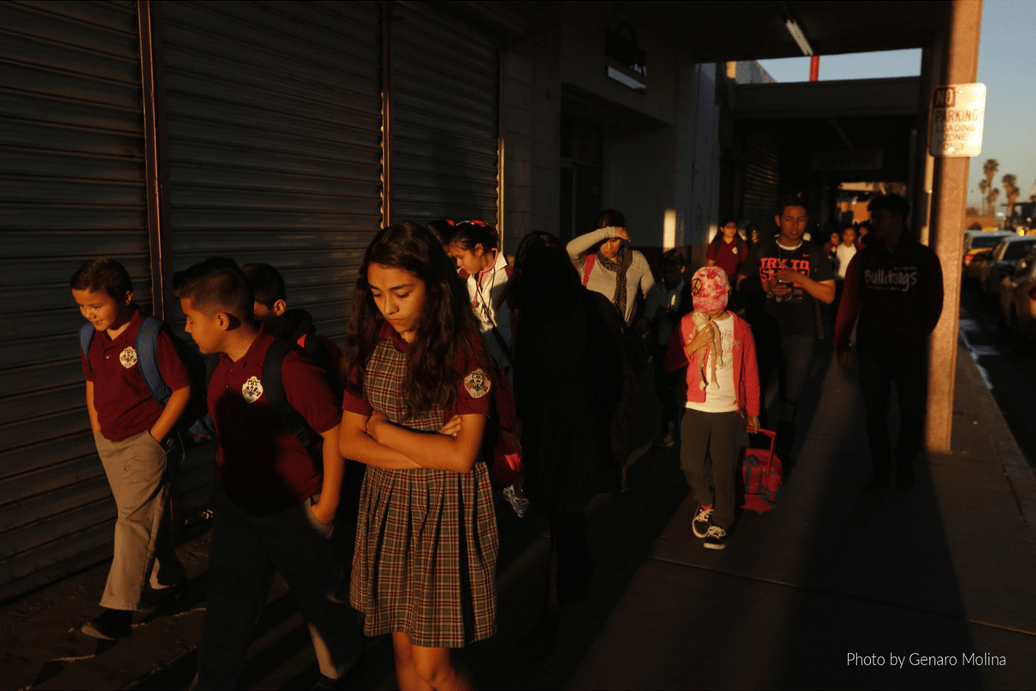
In Tijuana, Mexicali, Palomas, and other border towns in Mexico, thousands of American children cross the border every morning in order to receive an education in the United States. Though they attend U.S. public schools, their family situation and daily challenges hinder their ability to perform well and student scores in those areas are among the lowest in the country.

To receive a public education in Mexico as a Mexican citizen, American children must go through the process of applying for dual citizenship. These children report bureaucratic and economic obstacles in accessing their right to education. As a result, some children never register for school or enter school behind after waiting years for administrative approvals. The majority of students who successfully enroll do not receive the extra support they require initially to succeed and many students end up dropping out.

It is inevitable that children carrying U.S. passports will return to the United States at some point to live and work. Once back in the United States, they may face tremendous hurdles and meager opportunities due to language, cultural, and other barriers created by their forced separation from the United States.

The Rhizome Center for Migrants works with local government officials, academic institutions, and civil society organizations, to locate U.S.-born children currently residing in Western Mexico, and assess effective programming for increasing college opportunities and providing a path out of poverty.

To receive additional updates about our work on the ground in Mexico, subscribe to our newsletter here. You can also help support our local community projects with returned migrants and their children by making a tax-exempt donation to our Mexico Project today.
American children binational families children's day education family unity mexico students U.S.-Mexico border
Previous StoryThe Rhizome Center for Migrants Announces New Technology Strategist
Next StoryPopulation At Risk: Elderly Undocumented Mexican Workers

Related Articles

  • Annie
    How What I Learned Across the Border Will Impact My Future Career as an Immigration Attorney
  • USC Event
    Co-Deported U.S. Citizen Minors in Mexico are Greeted by Staff of the American Services Unit and Received Important Information on Higher Learning Opportunities

News & Press Releases

  • Play Online Pokies That Win Sunday, 24, Dec
  • What Are The Top 10 Online Slots In Belgium Sunday, 24, Dec
  • River Belle Casino Australia Sunday, 24, Dec
  • What Is The Highest Payout Online Casino Pokies In Australia Sunday, 24, Dec
  • Online Blackjack Belgium Legal Antwerp 2024 Sunday, 24, Dec

Updates


The Rhizome Center for Migrants

The Rhizome Center for Migrants

On our visit to the South of Mexico—to Tapachula, Cancún, and Villahermosa—one theme was consistent throughout. Very few organizations remain that can respond to the direct and complex needs of people in forced migration today. @asylumaccessmx closed two offices this month. @jrs_mx and @msf_mexico, one of the few orgs equipped to provide medical relief, have significantly reduced their operations in Mexico. Meanwhile @cdh_fraymatias, under attack, has reported multiple office break-ins this year. International orgs, including a now skeletal @acnurmx, are not able to do much in the face of a scaled-up phenomenon—deportation that leads to more displacement, and the active conversion of people with legal status—highlighting specifically the case of deported Cuban senior citizens—into a stateless and houseless situation. We were surprised to see some familiar faces from Guadalajara, who are now holding down the fort in Southern Mexico. We extend our support and solidarity to the network of remaining migrant-serving and human rights organizations, as we all lean forward to tackle a new and absurd crisis.#migracion #UsMxBorder #Chiapas #Tabasco #QuintanaRoo #Jalisco #thirdcountry #Deportation #asylumseekers #nonprofitsupport

… See MoreSee Less


Photo

View on Facebook

·
Share


Share on Facebook


Share on Twitter


Share on Linked In


Share by Email


The Rhizome Center for Migrants

The Rhizome Center for Migrants

Mexico Te Abraza is a tent NOT an integration program.The Mexican government's reception program, Mexico Te Abraza, is a quick reception point offering very limited government services in the initial moments after deportation. These services have mainly been relocated to the south of Mexico, where flights have ramped up. Last Thursday, the Mexican government received 4 deportation flights in Tapachula. Each of the more than 500 Mexicans deported that day have been torn from their families, communities, and homes. In places like Tapachula, according to organizations on the ground, the government no longer assists with onward transportation. From these reception points, each person, regardless of age, disability, language ability, or other condition—wearing the last thing they were wearing when they were picked up months before—must arrange their own transportation onward and navigate their deportation, family separation, and accumulated trauma with fewer and fewer government support.For those arriving in Jalisco, the Rhizome Center is a resource. If you or someone you know was deported and is now in Guadalajara, reach out to us via our Whatsapp at: +52 33 2182 0836. Our staff is bilingual and bicultur#mexicoteabrazab#Deportationa#USMexicoe#Tapachulac#Chiapasi#Guadalajaraa#Jaliscol#resourcesurces

… See MoreSee Less


Photo

View on Facebook

·
Share


Share on Facebook


Share on Twitter


Share on Linked In


Share by Email


The Rhizome Center for Migrants
is in Frontera Nogales Sonora – Nogales Arizona.
The Rhizome Center for Migrants

At a time of heightened and cross border migrant rights violations—and government abandonment of people and the organizations that serve them—it is important that we connect and reconnect with the broader migrant-serving community. After years of collaborating with staff at Kino Border Initiative / Iniciativa Kino para la Frontera and The Florence Immigrant & Refugee Rights Project, we had the opportunity to visit KINO's shelter in Nogales, Sonora, and learn from attorneys about their work at the Florence Project. Over the last year, attention has shifted from U.S. international protection to Mexican international protection, straining a system that barely grinds forward and isn't working for most people. See our link, below, a previous collaboration with KINO on #deportation and #displacement that is still relevant today.With more and more returned and deported Mexicans and other nationalities at the shelter, we borrowed an office and volunteered for the day. Issues regarding naturalization, return, families left behind, and the rupture of lives—in addition to the logistical stitching required to move one life from one country to another, weighs heavy on those now on this side of the border. 👉 KINO-Rhizome collaboration on U.S. deportations to dangerous and unstable countries and how the U.S. can and should prevent the displacement of people who have strong ties to the U.S. –> youtu.be/ExuWr2zKNrY?si=zWpq_5j01Sv5KOcV

… See MoreSee Less


Photo

View on Facebook

·
Share


Share on Facebook


Share on Twitter


Share on Linked In


Share by Email

About

The Rhizome Center for Migrants is an independent, secular 501(c)(3) nonprofit organization. Our Mexico Project, based in Guadalajara, Jalisco, supports deported and returned migrants through legal aid and reintegration services.


WHO WE ARE

  • ABOUT
  • OUR PEOPLE

WHAT WE DO

  • EVENTS
  • MEXICO PROJECT
  • LEGAL SERVICES
  • SPECIAL REPORTS
  • EDUCATIONAL PROGRAMS
  • GET INVOLVED

ABOUT US

The Rhizome Center for Migrants is an independent, secular 501(c)(3) nonprofit organization. Our Mexico Project, based in Guadalajara, Jalisco, supports deported and returned migrants through legal aid and reintegration services.

FIND US ELSEWHERE

en_USEnglish
es_MXEspañol de México en_USEnglish
Share via
Facebook
X (Twitter)
LinkedIn
Mix
Email
Print
Copy Link
Powered by Social Snap
Copy link
CopyCopied
Powered by Social Snap