
The Rhizome Center for Migrants
    17 de diciembre de 2019  |  Por Admón. del CRM En Noticias

    Abogada de sabático: trabajo voluntario con el Centro Rizoma del Migrante

    Sabbatical Attorney
    • Facebook
    • Twitter
    • Email
    • Más

    En diciembre, Bethany se unió al Proyecto México a través de The Florence Immigrant and Refugee Rights Project (el "Proyecto Florence") de Arizona, en donde trabaja como abogada encargada del Programa para Niños.

    Dado que muchos abogados quizá no conozcan los programas sabáticos que se ofrecen en sus organizaciones, le pedimos a Bethany que respondiera algunas preguntas acerca de cómo obtuvo un sabático, así como de su decisión de trabajar como voluntaria en el Centro Rizoma del Migrante.

    ¿De dónde vienes, Bethany?
    Vengo de la zona de Detroit, pero ahora vivo en Arizona.  

    ¿Cuál es tu papel en el Proyecto Florence?
    Soy abogada encargada del Programa para Niños. Nuestro equipo representa a niños inmigrantes detenidos por el gobierno, así como a los que liberan, tanto en los procesos de deportación como en los casos que se presentan ante los tribunales para menores.

    ¿Dónde trabajabas antes de llegar ahí?
    Trabajaba en el norte de Arizona y para la Nación Navajo. Brindaba servicios legales gratuitos para personas de bajos recursos. 

    ¿Por qué les solicitase un año sabático a tus empleadores actuales?
    Me parece que necesito un descanso tras tres años de hacer un trabajo tan emocional y de repercusiones muy significativas (que por cierto me encanta).   

    ¿Cuál es la política del Proyecto Florence con respecto a tomarse un descanso del trabajo?
    Nos permiten tomarnos un sabático con paga tras tres años de empleo. El autocuidado es una parte importante de nuestra cultura de trabajo, por lo que nos motivan a que aprovechemos esta prestación.  

    ¿Por qué elegiste Guadalajara y el Centro Rizoma del Migrante?
    Este año visité Guadalajara por primera vez y me encantó de inmediato. Es de mis ciudades favoritas de México. Sabía que quería volver aquí para mi sabático, pero no quería quedarme sin hacer nada. La misión y el trabajo del Centro Rizoma me interesaron, y quiero aprender más acerca de las experiencias de los deportados y repatriados en México.  

    ¿Qué es lo que más te entusiasma de iniciar tu sabático con nosotros en diciembre?
    Quiero conocer a las personas con las que trabaja el Centro Rizoma, así como a sus miembros y a otros voluntarios.  

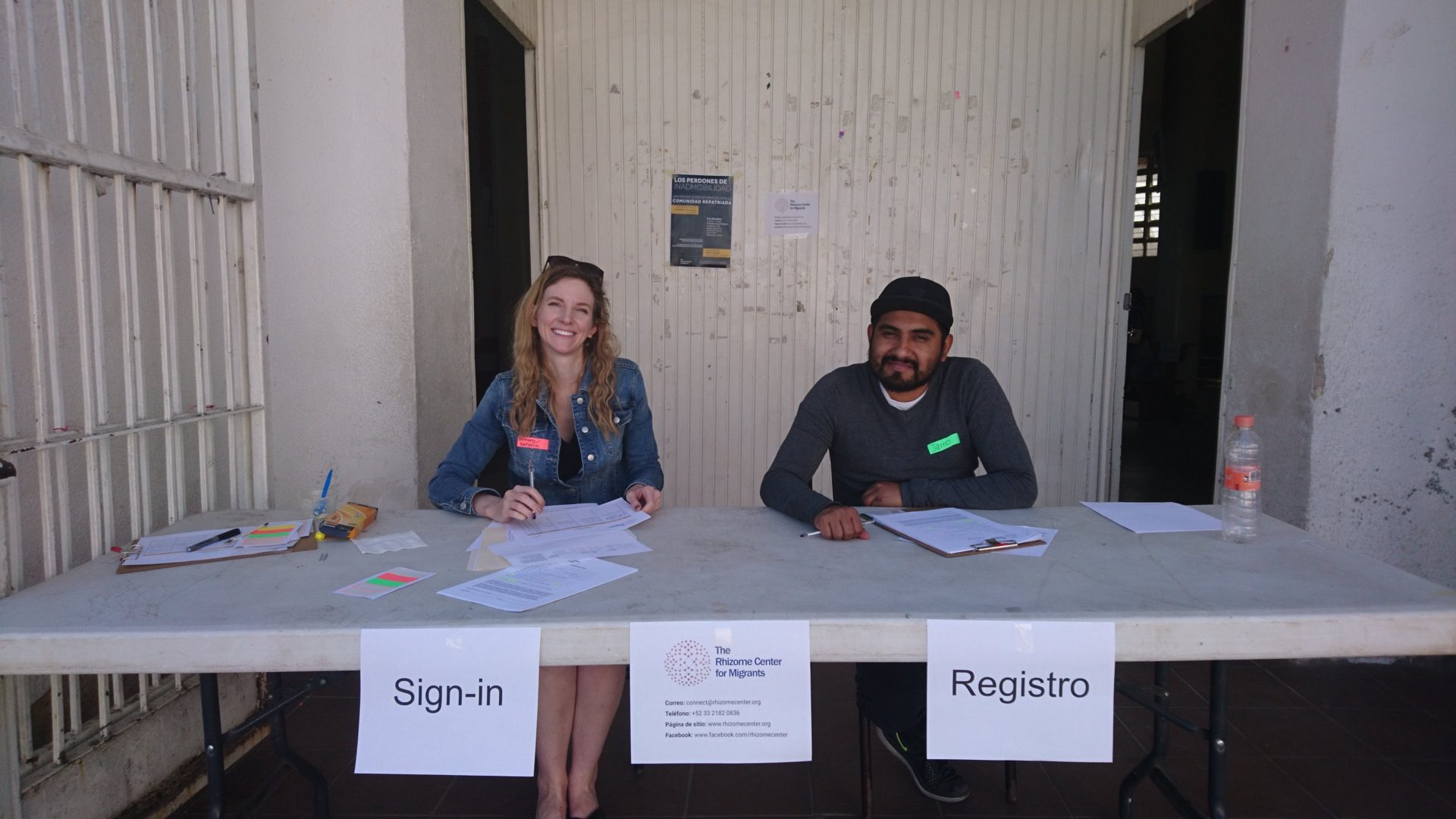
    La fotografía anterior fue tomada en nuestro taller sobre los perdones que tuvo lugar en diciembre de 2019. Durante su tiempo como voluntaria, Bethany tuvo la oportunidad de visitar un refugio y aprender más acerca de la experiencia real de los migrantes. Además, formó parte de una visita programada al Consulado General de los EE. UU. en Guadalajara.

    Fue un verdadero gusto tenerla aquí, y queremos agradecerle por apoyar de manera tan generosa nuestra causa y trabajo local. Esperamos que la experiencia enriquezca su entendimiento de la migración y repatriación, así como del impacto de gran alcance que tienen las políticas de inmigración de EE. UU. en esta región.

    Se invita a que los abogados que se encuentren de sabático busquen experiencias significativas tanto en lo profesional como lo personal durante su descanso del trabajo. A los abogados que les interese aprender más acerca de las oportunidades de tomarse un sabático con el Centro Rizoma del Migrante en México,pueden contactarnos mediante: connect@rhizomecenter.org 

    viajes en el extranjero derecho descanso abogado media carrera sin fines de lucro profesional sabático trabajo voluntario
    Historia anteriorPoblación en riesgo: los trabajadores mayores indocumentados en México
    Historia siguienteProcedimiento de Repatriación al Interior de México: Notificación a los 90 días en Guadalajara

    Noticias y comunicados de prensa

    • Bookmakers met meest WK 2026 duidelijkheid jueves, 22, Ene
    • Play Online Pokies That Win domingo, 24, Dic
    • What Are The Top 10 Online Slots In Belgium domingo, 24, Dic
    • River Belle Casino Australia domingo, 24, Dic
    • What Is The Highest Payout Online Casino Pokies In Australia domingo, 24, Dic

    Notificaciones


    El Centro Rizoma del Migrante

    The Rhizome Center for Migrants

    🥢 Many journeys, one table.A few weeks ago, a roomful of strangers gathered around a Guadalajara table to learn the surprisingly tricky art of rolling Vietnamese spring rolls — and to support migrants and refugees rebuilding their lives in Mexico.The evening was hosted by immigrant chef Alice Liu and her husband, Miguel, of @speakeasycocina, as a fundraiser for The Rhizome Center for Migrants. Along the way, we heard powerful stories about migration, deportation, belonging — and what it means to create home in a new place.Read the story in the Guadalajara Reporter: theguadalajarareporter.net/index.php/featured/64936-many-journeys-one-table-guadalajara-restaurat…And a longer, more personal version in The Esperanza Project: esperanzaproject.com/2026/mx/many-journeys-one-table/O si prefieres el español: elproyectoesperanza.com/2026/migracion/muchos-caminos-una-sola-mesa/❤️ And you can join the fun tomorrow night. Vietnamese-American chef, Charlie Huynh, of @letsphogdl is taking over Alice and Miguel’s kitchen for another special benefit, with Vietnamese food, community and a preview of dishes from a new street-food concept he’s developing.Proceeds support The Rhizome Center for Migrants’ holistic legal, humanitarian, and community support to migrants, refugees, returnees, and deported people rebuilding their lives in Mexico.📅 Wed, Aug 26th📍 Speakeasy Cocina / Alice & Miguel’s home* Reservations Speakeasycocina@gmail.com or WhatsApp +52 33 1146 2188. Limited seating available.⏰7pm-9pm🎟️ 400 pesos Come hungry. Come curious. Come help build community across borders. 🌏❤️

    … Más informaciónSee Less


    Fotografías

    Léalo en Facebook

    ·
    Compartir


    Compartir en Facebook


    Compartir en Twitter


    Share on LinkedIn


    Compartir por correo electrónico


    El Centro Rizoma del Migrante

    The Rhizome Center for Migrants

    On the final day of our "Frontlines and Fault Lines" immigration program, law students from Mexico and the U.S. put a week of learning into practice.At @teccampusgdl’s Guadalajara campus, students from TEC de Monterrey, @uwschooloflaw and @utexaslaw joined forces for a binational immigration law simulation facilitated by Rhizome Center founder, Tran Dang, Prof. Javier Contreras of TEC de Monterrey, and Prof. Georgina Olazcon of UW.Their client was fictional, but his circumstances were drawn from realities playing out every day: “José,” a 68-year-old Cuban national, had lived in the U.S. since age 2 before being deported to Mexico. His children and grandchildren remain in the U.S. He speaks little Spanish, has no meaningful ties to Mexico, lacks stable housing and documentation, and has urgent medical needs. His overriding goal: to get back home to his family.Working in mixed Mexican-U.S. teams, participants had to look simultaneously at both countries’ legal systems—and beyond the law. What needed to happen in the next 48 hours? Could José get his insulin? Food? Safe housing? Identification? Access to his money? What legal status could protect him in Mexico while attorneys pursued all possibilities for his return to the United States?The exercise kept returning to a principle at the heart of the Rhizome Center’s work: holistic representation starts with the person, not the legal claim.Students wrestled with conflicting laws, missing information and imperfect options, consulting across borders and disciplines before presenting their strategies.One participant captured another lesson from the day: in today’s rapidly shifting immigration landscape, creativity in legal strategy is essential—and “that’s only doable when we’re talking to one another, sharing ideas and working in a team.”Because deportation crosses borders, meaningful advocacy must cross them too.

    … Más informaciónSee Less


    Fotografías

    Léalo en Facebook

    ·
    Compartir


    Compartir en Facebook


    Compartir en Twitter


    Share on LinkedIn


    Compartir por correo electrónico


    El Centro Rizoma del Migrante

    The Rhizome Center for Migrants

    Four experts. Four different windows into Mexico’s rapidly changing migration landscape. During our 14th “Frontlines and Fault Lines: Migration, Resistance, and Resilience” immigration program, participants heard from Heriberto Vega, UdG professor; Javier Contreras, Law Program Director at TEC Campus Guadalajara; Nancy Estrada, ACNUR, la Agencia de la ONU para los Refugiados Guadalajara; and César Rodríguez, FM4 Paso Libre legal director.Dr. Vega placed today’s moment in a longer history of migration through Mexico and of the civil society movement that fought to change how migrants are understood and treated. Mexico’s 2011 Migration Law established a human-rights framework, including recognition that people in irregular status are still rights-holders and that humanitarian aid should not be criminalized.Javier showed just how powerful that framework is: under Mexico’s Constitution, fundamental rights belong to people, not only citizens. Even as immigration authorities repeatedly violate protections guaranteed under Mexican law, amid intense pressure to enforce U.S.-driven migration containment, migrant advocates can win when they challenge abuses in court.Nancy described another historic shift: Mexico is no longer simply a country of transit. For the first time in UNHCR’s monitoring, Mexico has become the principal intended destination for many people on the move. At the same time, its refugee-protection system is being asked to do more with dramatically fewer resources, while documentation barriers leave people exposed to exploitation, exclusion and organized crime.Cesar brought those contradictions into the present political moment. As U.S. migration enforcement is increasingly pushed southward, people are contained or returned to Mexico at precisely the moment when government agencies and civil society have less capacity to provide the legal, medical, humanitarian and psychosocial support they need. For many, that means prolonged uncertainty or legal limbo.Their combined takeaway: Migration, refuge, deportation and integration are increasingly regional realities, demanding cross-border knowledge, accountability and collaboration.

    … Más informaciónSee Less


    Fotografías

    Léalo en Facebook

    ·
    Compartir


    Compartir en Facebook


    Compartir en Twitter


    Share on LinkedIn


    Compartir por correo electrónico

    Acerca de nosotros

    El Centro Rizoma del Migrante es una organización sin fines de lucro independiente y secular 501(c)(3). Nuestro Proyecto México, situado en Guadalajara, Jalisco, apoya a los migrantes deportados y repatriados mediante asesoría legal y servicios de reintegración.


    ACERCA DE NOSOTROS

    El Centro Rizoma del Migrante es una organización sin fines de lucro independiente y secular 501(c)(3). Nuestro Proyecto México, situado en Guadalajara, Jalisco, apoya a los migrantes deportados y repatriados mediante asesoría legal y servicios de reintegración.

    ENCUÉNTRENOS EN OTRAS REDES

    es_MXEspañol de México
    en_USEnglish es_MXEspañol de México
    Share via
    Facebook
    X (Twitter)
    LinkedIn
    Mix
    Email
    Print
    Copy Link
    Powered by Social Snap
    Copy link
    CopyCopied
    Powered by Social Snap