The Rhizome Center for Migrants
    21 de julio de 2020  |  Por Admón. del CRM En Comunicados de prensa

    Grupos regionales exigen que la CIDH responda ante las violaciones sistémicas de los derechos humanos en el hemisferio.

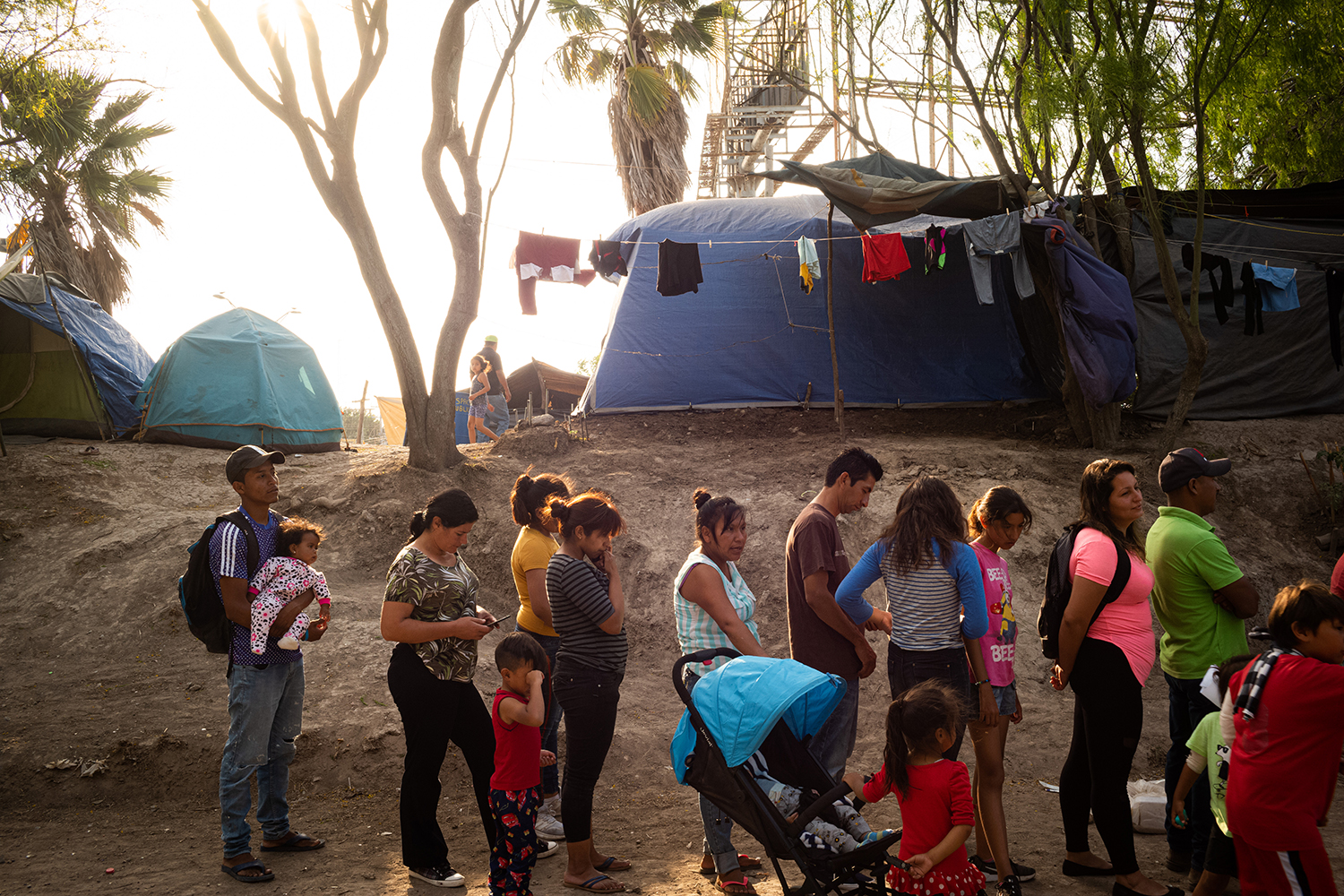
    Migrants wait in line for food distribution at the Matamoros camp March 19. Food was previously given out in a centralized tent but is now distributed at separate locations in the camp to prevent large gatherings. Ivan Flores for Foreign Policy
    19 de marzo, los migrantes hacen fila para recibir alimentos en el campamento Matamoros. Antes, el alimento se distribuía en una tienda centralizada, pero ahora se distribuye en puntos separados del campamento para evitar que se formen grandes aglomeraciones. Ivan Flores para Foreign Policy.
    • Facebook
    • Twitter
    • Email
    • Más

    [21 de julio de 2021, Guadalajara, Jal.] El día de hoy el Centro Rizoma del Migrante se unió a una coalición regional de 41 organizaciones para solicitar una audiencia temática internacional ante la Comisión Interamericana de Derechos Humanos. Se solicita que la Comisión proteja los derechos humanos en el hemisferio americano y se enfoque en los impactos de gran alcance que tienen las políticas migratorias de EE. UU. contra los migrantes, refugiados y menores no acompañados a través de la región. 

    La solicitud gira en torno a tres áreas principales que generan preocupación.

    Las medidas contra el COVID-19 que implementaron los gobiernos de Estados Unidos y México violan, entre otros, los derechos a solicitar asilo; a no repatriar a un país en el que la vida o la libertad se encuentren bajo amenaza; al debido proceso; a no ser sometido a detenciones arbitrarias; a la unión familiar; a respetar los intereses superiores de los menores y a preservar la salud y el bienestar.

    Los Acuerdos de Cooperación de Asilo (ACA) violan el principio de no devolución; los requisitos que estipula la Agencia de la ONU para los Refugiados y la Ley de Inmigración y Nacionalidad (INA, tal sus siglas en inglés) de EE. UU. con respecto a los traslados a un tercer país seguro; así como los derechos a un procedimiento justo y al debido proceso.

    Conforme a los Protocolos de Protección a Migrantes (MPP, tal sus siglas en inglés), Estados Unidos, en coordinación con México, viola el principio de no devolución y no protege el derecho a la vida, a la libertad, a la integridad y seguridad personal, a la igualdad ante la ley y al debido proceso.

    Para leer la solicitud completa que se le entregó a la Clínica de Defensa de Inmigración y Deportación de la Universidad de San Francisco, haga clic en este enlace.
    hemisferio americano solicitantes de asilo sociedad civil COVID-19 deportación unión familiar derechos humanos México pandemia refugiados frontera entre México y EE. UU. menores no acompañados
    Historia anteriorLa ONU debería fortalecer el reconocimiento y la inclusión de adultos y migrantes mayores dentro del Sistema de las Naciones Unidas.
    Historia siguienteLa Ley MORE podría proteger familias y migrantes contra la deportación

    Artículos relacionados

    • Annie
      How What I Learned Across the Border Will Impact My Future Career as an Immigration Attorney
    • USC Event
      Co-Deported U.S. Citizen Minors in Mexico are Greeted by Staff of the American Services Unit and Received Important Information on Higher Learning Opportunities

    Noticias y comunicados de prensa

    • Bookmakers met meest WK 2026 duidelijkheid jueves, 22, Ene
    • Play Online Pokies That Win domingo, 24, Dic
    • What Are The Top 10 Online Slots In Belgium domingo, 24, Dic
    • River Belle Casino Australia domingo, 24, Dic
    • What Is The Highest Payout Online Casino Pokies In Australia domingo, 24, Dic

    Notificaciones


    El Centro Rizoma del Migrante

    The Rhizome Center for Migrants

    Mexico has now received over 18,000 non-Mexicans deported from the United States, including disabled persons, older persons, and those with severe or chronic health conditions.Deported Cubans, Haitians, Nicaraguans, and Venezuelans transferred to Mexico now find themselves in Southern Mexico, undocumented and far from their families, homes, and communities. For many, asylum is the only durable option for regularizing status.Anyone who finds themselves—or who has a deported family member stranded in Mexico—should have the names of institutions and organizations providing legal orientation and aid on the asylum process in Mexico. Here are seven free immigration law resources in Villahermosa, Cancun, and Tapachula, where the majority transferred to Mexico currently reside.

    … Más informaciónSee Less


    Fotografías

    Léalo en Facebook

    ·
    Compartir


    Compartir en Facebook


    Compartir en Twitter


    Compartir en LinkedIn


    Compartir por correo electrónico


    El Centro Rizoma del Migrante
    is in Guadalajara Jalisco.
    The Rhizome Center for Migrants

    Yesterday's SCOTUS decisions mean that people seeking protection at U.S. borders will be turned away, while 1.3+ million people with temporary or other protected status could lose those protections—placing them at risk of deportation.Across the Ameri#Deportationation has become a major driver of displacement, uprooting people from communities where they have lived for decades, built families, and put down deep roots. If the administration carries out its stated goal of 1 million deportations a year, the resulting displacement would rival some of the largest displacement crises in the Americas in recent decades.‼️ While Mexicans have long been the largest nationality deported from the United Sta#mexicoexico as a country has been complacent to U.S. pressures to become the primary deportation destination for 3rd country nationals. Today some 17,000+ Cubans, Haitians, Nicaraguans, and Venezuelans have been sent to Mexico and remain stranded in the South of Mexico with limited legal protections and few resources. As needs grow, migrant-serving organizations across Mexico struggle to address the current crisis amid severe funding cuts. ✊Please consider supporting The Rhizome Center for Migrants' work via Zelle to connect@rhizomecenter.org (we get 100%) or via givebutter.com/rhizomecenter. Your donation helps ensure that justice does not end at the border, and people arriving in Mexico today do not have to face deportation alone.

    … Más informaciónSee Less


    Fotografías

    Léalo en Facebook

    ·
    Compartir


    Compartir en Facebook


    Compartir en Twitter


    Compartir en LinkedIn


    Compartir por correo electrónico


    El Centro Rizoma del Migrante

    The Rhizome Center for Migrants

    What is the #SoyMéxico program, and why isn’t it year-round in #Jalisco?The Soy México program allows children born in the U.S. to Mexican parents to locally register their birth and receive a CURP by simplifying bureaucratic barriers and, in some cases, reducing reliance on apostilles in practice. These documents enable access to school, healthcare, and other basic rights in Mexico by providing proof of identity and recognition of Mexican nationality. In Jalisco, the program will open this year from Aug-Oct. At The Rhizome Center for Migrants, we see how these barriers have relegated children to the margins of society. The most vulnerable children have not been able to obtain any ID for years, and were never able to integrate into the Mexican public school system. 👉 Our report on U.S. Citizens in Mexico: Displaced Without Protection –> tinyurl.com/mry4ayvj‼️We urgently call on the State of Jalisco to fully implement the 2024 federal reform eliminating apostille requirements for these registrations, or adopt a year-round, accessible model like states such as Morelos—so that every child can be recognized in Mexico.If you need help obtaining U.S. birth records, the apostille, or require a correction to vital documents, 📞 us on WhatsApp at: +52 33 2182 0836.

    … Más informaciónSee Less


    Fotografías

    Léalo en Facebook

    ·
    Compartir


    Compartir en Facebook


    Compartir en Twitter


    Compartir en LinkedIn


    Compartir por correo electrónico

    Acerca de nosotros

    El Centro Rizoma del Migrante es una organización sin fines de lucro independiente y secular 501(c)(3). Nuestro Proyecto México, situado en Guadalajara, Jalisco, apoya a los migrantes deportados y repatriados mediante asesoría legal y servicios de reintegración.


    ACERCA DE NOSOTROS

    El Centro Rizoma del Migrante es una organización sin fines de lucro independiente y secular 501(c)(3). Nuestro Proyecto México, situado en Guadalajara, Jalisco, apoya a los migrantes deportados y repatriados mediante asesoría legal y servicios de reintegración.

    ENCUÉNTRENOS EN OTRAS REDES

    es_MXEspañol de México
    en_USEnglish es_MXEspañol de México
    Share via
    Facebook
    X (Twitter)
    LinkedIn
    Mix
    Email
    Print
    Copy Link
    Powered by Social Snap
    Copy link
    CopyCopied
    Powered by Social Snap